
Join the Visual Effects and the Screen Music and Sound Guilds as we explore AI,…
Member Spotlight – Jordan Smith | Native Audio
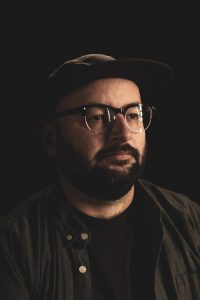
Jordan has been a key member of the Native Audio team for almost a decade. His talents as a dialogue editor, sound editor, ADR mixer and re-recordist have had him work with a diverse range of genres and forms, from experience installations and video games to factual TV and feature films, both in New Zealand and Canada. Most recently Jordan worked as the Supervising DX Editor & Re-Recording Mixer for Shrek Kātahi Te Korokē that will be premiering at Māoriland Film Festival this month. We chatted to Jordan about his career and his experience working on this project.
Jordan, you’ve worked across, recording, re-recording, editing and mixing in your career, can you tell us about your journey and how you found your audio specialty?
I started my career here at Native Audio in 2012. As it goes in New Zealand audio roles, you tend to pick up lots of different skills. I had been doing a lot of TV mixing and editing when I first started, shows like Pūkana and audio books. From there, I started moving onto more sound editing on other larger shows and films. My speciality is dialogue, particularly dialogue supervision, editing and ADR supervising.
I’m interested to hear about the difference of working with dialogue captured on set vs ADR. When you are doing ADR what is it like in the room? Who is there in terms of capturing performance?
Different people for different projects are in the room. But typically for ADR we would have a director or producer in the suite, and one of our ADR mixers; sometimes me. If I’m in the role of supervising that ADR, then I will be there in that capacity and someone else will be operating.
Depending on the scale and size of the project, I may take on the role of directing talent as well. There’s varying different types of ADR. You can have creative ADR which needs to be recorded to help tie the story together. That’s where having the creative team behind the project in the recording sessions is critical. And then technical ADR, in which someone like me when I’m dialogue editing, cues up and puts in a request in for a line. For example if a mic had dropped out or for another technical reason. You’re sort of always finding that balance between the creative and the technical stuff.
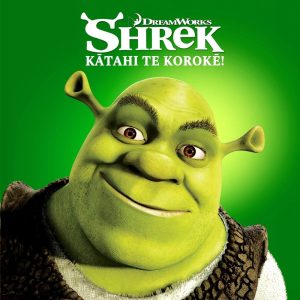
A recent project you have been a part of is Shrek: Kātahi Te Korokē which you worked on as the Supervising DX Editor & Re-Recording Mixer. Can you tell me about your journey into long form te reo Maōri dubbing work?
The biggest film I did to start off with, was Moana in 2017 which was spearheaded by Matwewa Media. That was my first introduction into t
he full dubbing of te reo Māori in long form animation. Following on from Moana, I’ve been involved in five other Disney films with Matewa Media including The Lion King, Frozen, Coco, Encanto, Moana 2. Leading into this latest project Shrek: Kātahi Te Korokē with Māoriland Film Productions.
Can you tell me about the process of the project?
What happens is we as a studio receive assets that are the original version of the film and that comes with different stems. We get the full mix, which is kind of everything as it was played in its entirety. Then we get things like the dialog stem, the effects stem, the music stem, and the M and E, which is the music and effects stem as well. We’re recording to those elements during the entire record process. We’ll reference what they did originally in te reo Pākehā, and then we will adapt what is being said in terms of performance at the direction of the translators and directors.
We work with a program called VoiceQ. VoiceQ is a locally owned dubbing software made by Kiwa, and we’ve been using that for a long time. Translators use the program to write up all the scripts. Voice Q also runs our text on screen for the actors to perform to like karaoke.
We also use Voice Q to change text on the fly if something isn’t working in terms of sync or from the director and translator’s side. We are often making tweaks for the sync as we record as well. So, if something is a little too long, a little too short, things like that we’ll look together at the line and translate a version that works onscreen.
So when you’re recording do you have someone supervising translation as well as technically? How does that work?
Depending on the project, there might be translators in the session too. There is always someone directing who is fluent in Te Reo Māori and overseeing that. When I’m recording or supervising I’m overseeing things technically. From my role it’s more things like, is the projection good to match the space the character is in? Does it match what they’re doing on screen well enough? Where I collaborate a lot with directors and translators technically is with regards to sync. Te reo Māori always ends in a vowel. So, depending on the animation, you’re looking at ways of being able to cheat some sync, sometimes not quite ending on a vowel in the animation. Or if someone’s got a very clear lip close, what are we going to put there instead? Is it going to be a vocalization or is it going to be some other way to help cover?
What level of fluency do you have to have in a language to be doing this type of work?
I’m fluent in English, but I’m not fluent in te reo Māori. I’m very privileged to have been able to work on these projects. But I would encourage everyone to be learning because the value that is there inherently is massive. It’s not for me to say if you should be fluent or need to be fluent, but if you aren’t I think that you should make good strides in learning a Tīkanga Māori environment and learning the language. These kaupapa have led me to be on my own te reo Māori journey. It encouraged me to start courses last year, attending Kura Pō and also doing other modules from home. I feel it upon me and I feel it’s a necessity because the type of work that I do is often indigenous. From the work that I’ve done on The Mountain, the upcoming Marlon Williams: Ngā ao e ruadocumentary, Alien Weaponry: Kua Tupu Te Ara, We Were Dangerous; all are Māori and learning Te Reo more has been invaluable in those projects. We need to be encouraging all our guild members to learn and engage.
Did you have any challenges or highlights from the project?
There’s definitely highlights! I was lucky enough to be able to mix Shrek. We’ve got a mix theatre here at Native Audio and I mean, first of all, being able to watch Shrek in 5.1 in a cinema environment when I’ve not seen it for 20 years was kind of amazing. It’s definitely a film that I grew up with so, you know, I felt very lucky to be able to work on this kaupapa and hear that. Once It was all mixed, having the characters come to life against the screen and hearing that was a real highlight too.
What do you love about your job?
I love just working with everyone towards just the same common goal. You’re trying to create something that’s for the better of whatever project’s coming in and make it sound incredible. But genuinely, I talk a lot, so I really enjoy hanging out with people, chatting with them, particularly when they’re in the studio as well. And like, just being able to see all sorts of different people, everyone who comes through our door. We also have a really great team here at Native Audio. Everyone is fantastic at what they do. We’ve just got a really good, close-knit team that it’s fantastic to come into work with every day.
What’s something you want to share about what you do with other screen professionals?
Just that audio post is multifaceted. There’s many faces and disciplines of audio post that can really enhance work and it is so collaborative. Don’t be afraid to ask us questions about what we do. It is sometimes seen as a dark art but we are more than happy to demystify what we do. Involving audio post as early as possible in a project as well. Even when you’re writing your scripts, when you’re going to look at your locations. Involving us early can be really invaluable.
We thank Jordan for taking the time to speak to us! You can get in touch with him and the team at Native Audio through their website.
Shrek: Kātahi Te Korokē will premiere this month at Māoriland Film Festival in Ōtaki.

Comments (0)